For CEOs & Boards
Your biggest decisions rest on reports polished three times before reaching you.
Every layer of recap hides a small problem — until it becomes red numbers next quarter, and you are always the last to know. Here, AI reads the original customer conversations and reports straight to you.
Nothing can be hidden from you anymore
Straight from the source, not layered recaps
Drill down from any number to the original chat
15-minute demo via WhatsApp — no commitment, no credit card, answered by a human.
Product illustration — not real company data.
 Just Type It
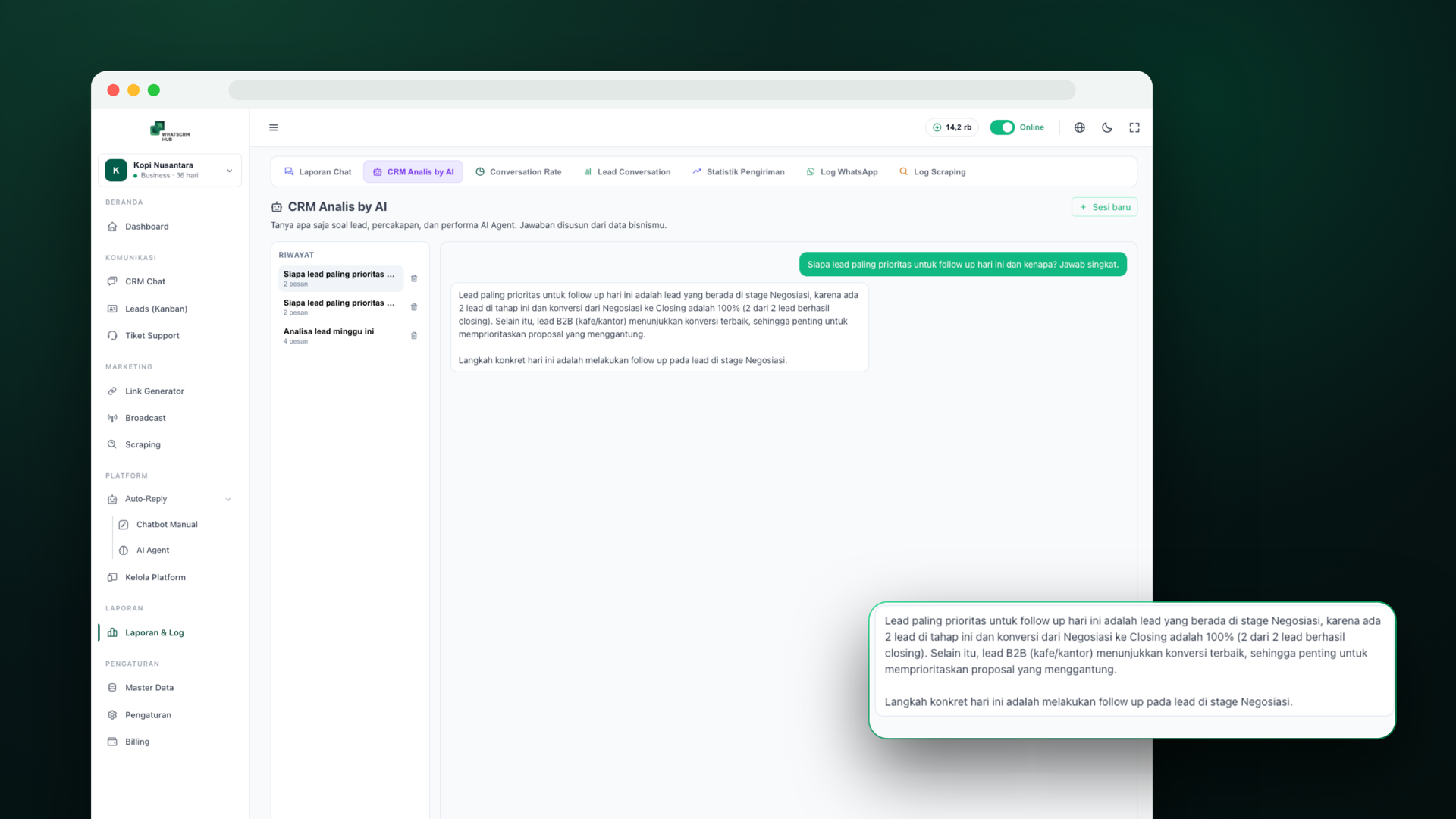
Questions that used to be answered with opinions — now answered with data.
The AI reads every customer conversation across divisions and branches daily, then answers you directly — without passing a single desk.
“Which division is leaking this week?”
Funnel leaks show up at the exact stage and unit — not as a total that dropped at month-end.
“How long do our customers actually wait?”
Real SLAs per division, branch, and person — computed from actual chats, not from recaps your staff assembled.
“Is the service standard followed in every branch?”
Replies that drift from the SOP — pricing, promises, tone — get flagged per branch for review.
“What never makes it into the monthly report?”
Complaints never closed, big prospects left cold, shifting patterns — flagged before they become red numbers.
“Is this division underperforming, or is its market just harder?”
Cross-unit comparison on the exact same yardstick, so the gap reads as execution — not excuses.
“Is this quarter's projection realistic?”
An independent estimate from conversations actually happening in the field — a benchmark for the forecast rolling up from below.
 The Executive Report
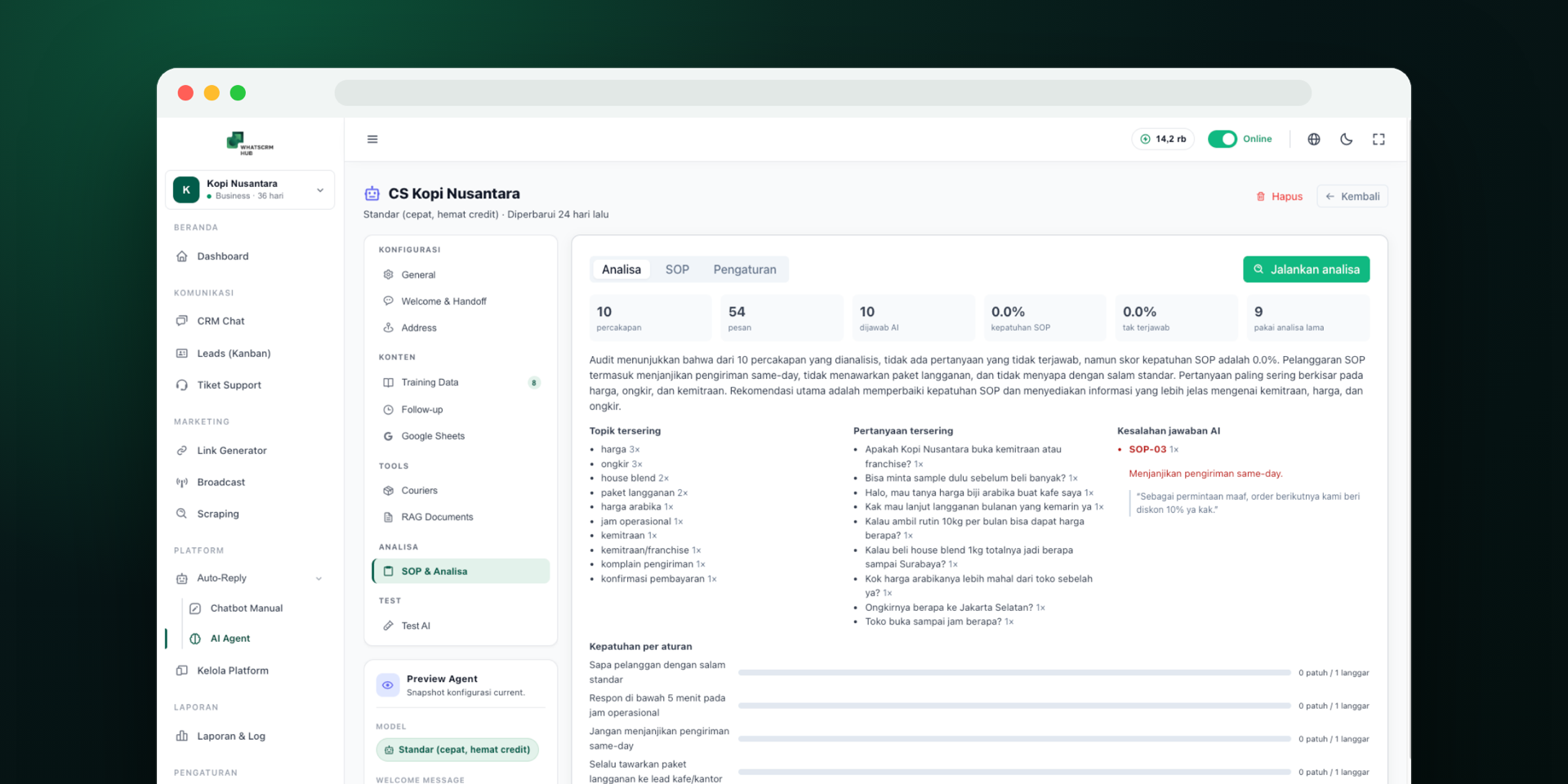
Every morning: the state of the whole company, straight from the source.
Not a recap assembled through layers — a summary the AI reads directly from yesterday's customer conversations.
Sample report format — the numbers above are illustrative, not statistics.
 Goes Where You Go
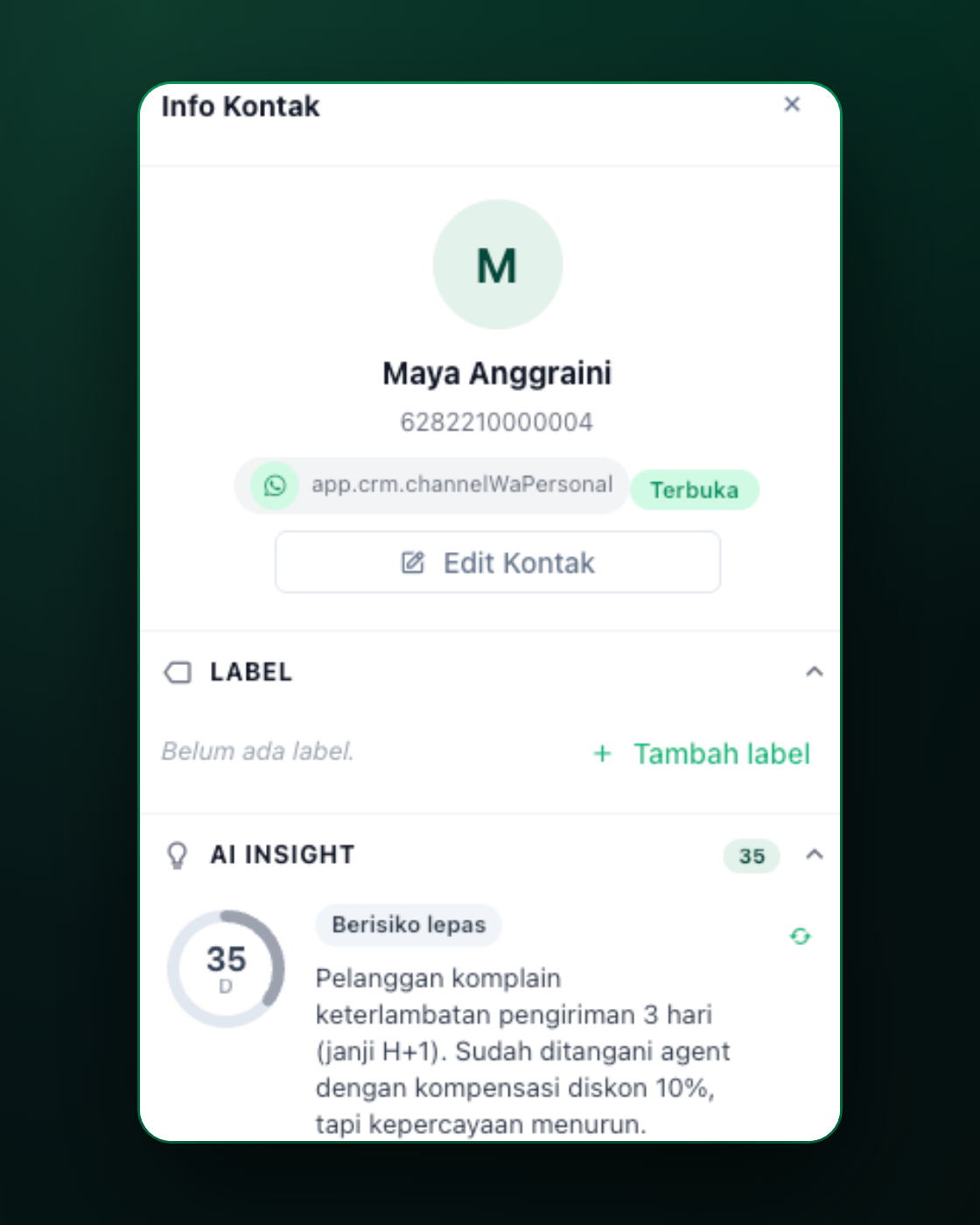
The state of the whole company, opened between meetings — from your phone.
The mobile app is included: executive reports, drill-downs, and AI questions follow you anywhere.
The executive report in your pocket
The summary across divisions and branches reads from your phone before the first meeting starts.
Odd number? Trace it on the spot
Drill down from a metric to the original chat straight from your phone — no waiting for a desk.
Big risks chase you first
Complaints from major-contract customers and serious drift get notified in real time — not in the report next month.
Sample report format — the numbers above are illustrative, not statistics.
The Difference
Other dashboards show you numbers. This AI explains why the numbers look that way.
BI tools count whatever the team types into the system. WhatsCRM Hub AI reads the original conversations.
Nothing you already run needs replacing — this is a layer of eyes and ears on your customer conversations.
Bring one question that never gets a straight answer in your Monday meeting — watch the AI answer it in a 15-minute demo.
Book an Executive Demo
15-minute demo via WhatsApp — no commitment, no credit card, answered by a human.
The Foundation Stands
And every one of those conversations becomes a controlled company asset.
Cross-division analysis is only possible when the data lives intact in one system — not scattered across staff phones.
The fear
“I only find out about problems after the customer is gone.”
The answer
Conversations past their response threshold and complaints never closed surface automatically in the report — long before they become formal complaints.
The fear
“A key employee resigns and the customer relationships leave with them.”
The answer
Conversations and contacts stay in the company system. Access is reassigned and the relationship continues without the customer noticing a handover.
The fear
“If I ask for data this detailed, the team will feel over-monitored.”
The answer
What gets reported are work metrics and business risks, not personal surveillance. The people doing the work right benefit most, because it finally shows.
In Their Words
What changed once the system was running.
Still Unsure?
Board-level questions.
At a Glance
Key facts about this page.
Sales blames the leads, marketing blames sales. WhatsCRM Hub AI reads every customer conversation across divisions and branches, then reports straight to the CEO: real SLAs, funnel leaks, SOP drift, and risks that never make it into reports.
- WhatsCRM Hub is an AI-powered business communication platform — this page is for CEO.
- AI that reads conversations across every division and branch — then reports straight to you, unpolished by anyone.
- Nothing can be hidden from you anymore
- Straight from the source, not layered recaps
- Drill down from any number to the original chat
- Includes a mobile app; a self-hosted option offers full data control.
Big decisions should not rest on reports you cannot verify.
Starting this week, every number on your desk can be traced to the original conversation — and what goes unreported gets read too.
Discuss on WhatsApp
15-minute demo via WhatsApp — no commitment, no credit card, answered by a human.