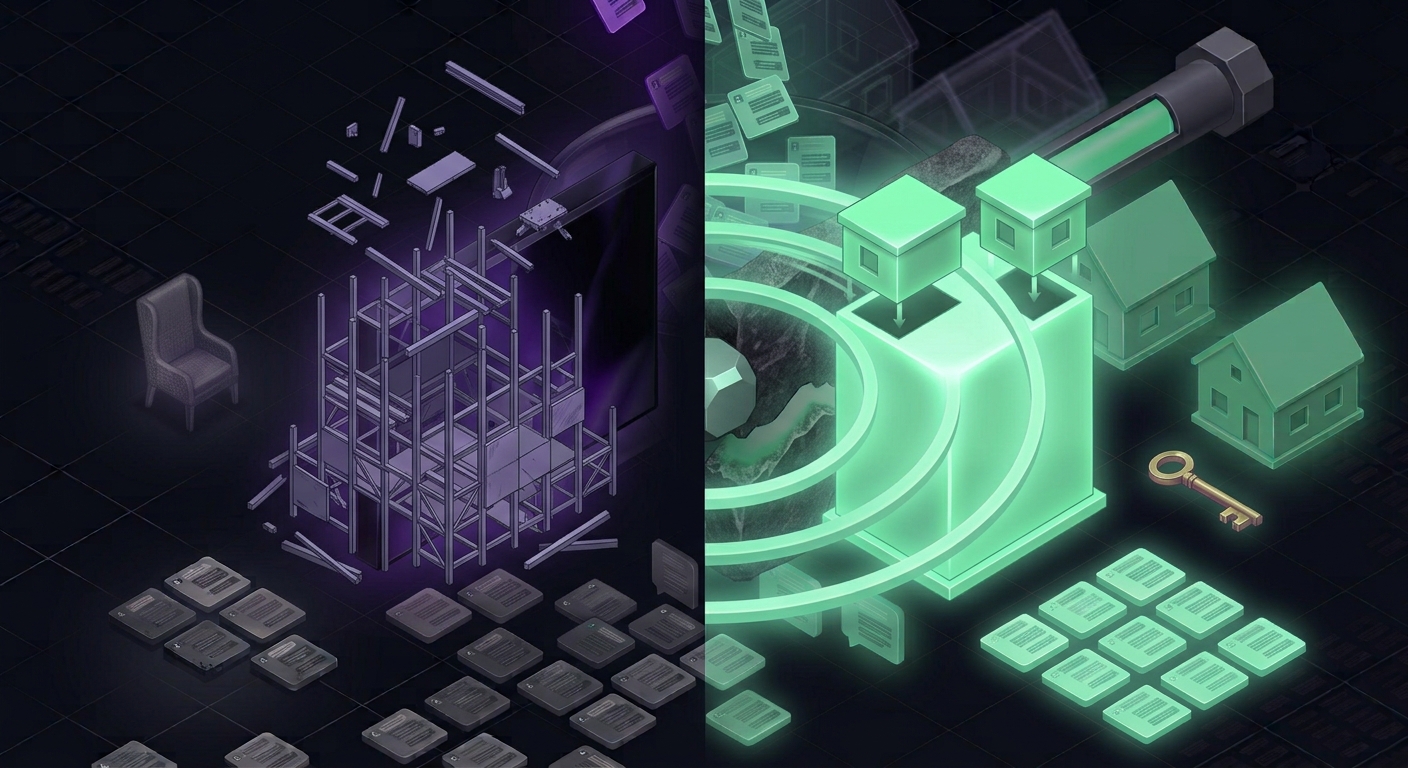

Why sampling based QA misleads
The old standard in many customer service teams is a supervisor reviewing five to ten conversations per agent per month. If an agent handles a thousand conversations a month, less than one percent of their work is evaluated. Conclusions about the whole team are then built on that sample.
The consequence is not only inaccuracy but unfairness. An agent whose sample happened to be weak is rated poorly, another whose sample was strong is rated well, when both may in fact be equal.
Four things sampling will never show
- Conversations never answered. Sampling draws from chats that have content. Empty threads never enter the sample, yet they are the biggest failure.
- Quality drift within a day. Replies at nine in the morning and nine at night usually differ sharply, and random sampling hides it.
- Recurring complaints. One complaint looks like a case. A hundred similar ones is a product or process defect.
- Escalations that never happened. Cases that should have gone to the technical team but were left hanging only surface when everything is reviewed.
A scoring framework that scales to every conversation
- Timeliness. Time to first reply and the longest gap mid conversation.
- Resolution. Whether the problem was actually solved or the thread simply stopped.
- Procedural compliance. Identity verification, mandatory disclosures, and promises within policy.
- Tone and empathy, especially in threads carrying anger or disappointment.
- Missed opportunity. Customers who signalled interest in buying more and were never followed up.
Where AI fits in a full audit
Manually scoring a thousand conversations per agent is impossible. The role of AI here is not to replace the supervisor but to change supervisory work from reading to deciding.
A practical flow: the system reads every conversation, scores the five dimensions, then hands the supervisor three short lists. First, high risk conversations needing action today. Second, recurring error patterns that should become training material. Third, exemplary conversations worth sharing with the team.
The supervisor still reads, but reads thirty conversations that genuinely matter rather than ten random ones.
Using it for coaching, not punishment
- Publish the criteria before scoring starts. No hidden dimensions.
- Show trends per agent, not single incidents. One bad conversation is a bad day, not a character trait.
- Separate system problems from people problems. If the whole team fails the same dimension, it is a process or workload issue.
- Give feedback within days, not months. Coaching value collapses once the conversation is forgotten.
Metrics that prove the audit is working
- Percentage of unanswered conversations, ideally approaching zero.
- Average resolution time per issue category, not blended.
- Repeat contact rate, customers returning with the same issue within seven days. The most honest quality indicator.
- Score spread across agents. A wide spread signals uneven training.
Frequently asked questions
Will the team feel over monitored?
Usually the opposite when criteria are transparent and results are used to defend the team when workload is too high. What makes teams anxious is secret scoring on random samples.
How do multilingual conversations work?
The criteria stay the same. What matters is that the analysis understands the language and speech style your customers actually use.
Does this replace customer satisfaction surveys?
No. Surveys measure perception, conversation audits measure behaviour. Audits cover one hundred percent of customers while surveys only cover those willing to respond.
Next step
Take one past month of conversations, run a full audit, and compare against your current sampling results. The difference is usually surprising. Details on the WhatsCRM Hub solutions page.